What may have been bad news for a tiger turned out to be a good one for the world. Two British officers out hunting for the big cat stumbled upon the rock-cut caves of Ajanta in 1819, lying in obscurity for centuries. Travellers and historians have been richer for it ever since. The Ajanta caves are located in Aurangabad in the western state of Maharashtra in India.
The handiwork of Buddhists, the caves were carved into a semi-circular steep rocky face, about 250 feet (76 metres) high, overlooking a narrow gorge with the Waghora stream flowing through it. Five of the caves here served as chaitya-grihas (sanctuary) while another 25 as viharas (monasteries). The caves are now connected by a terraced path which is a later development; originally, all had individual steps leading to the stream below. These steps have all but disappeared now. The caves had come up between the second century B.C. and the seventh century A.D., with no known patrons.
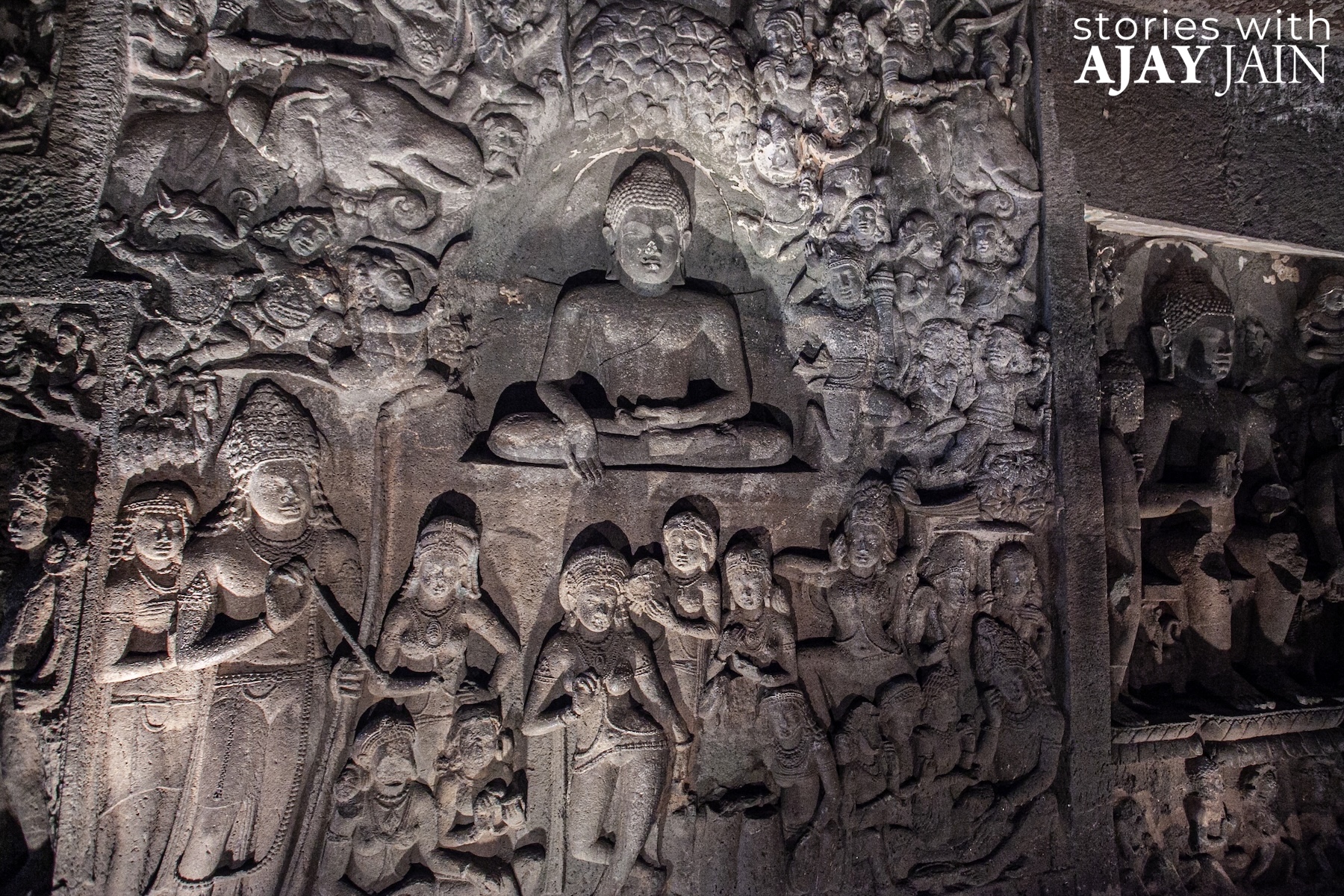
The surviving mural paintings have established themselves as popular icons in their own right, inspiring many a modern artist. These overshadow the sculptures, no less impressive. The theme of the paintings are mostly religious depicting the Buddha and incidents from His life, Bodhisattvas and the Jatakas presenting tales of the previous births of Gautama Buddha. The painting on the ceilings are mostly decorative in nature though. Let the images speak for themselves.
The How of Rock-Cut Architecture
The creation of something like the caves at Ajanta was no mean task. Work would start with marking outlines, and finishing the ceilings first. It then moved downwards, cutting deep alleys with sharp and heavy instruments like the pickaxe. This was followed by the breaking of intervening ridges, leaving solid blocks for pillars where necessary. The floor was taken care of last. The finishing and carving was executed using hammer and chisel. After the façade of the verandah, workers went deep into the interiors, attending to the hall first and then antechamber, shrine or cells as planned. All in all, it was a job requiring delicate handling, precision and extreme care. And skills and creativity we cannot imagine anyone possessing in modern times.
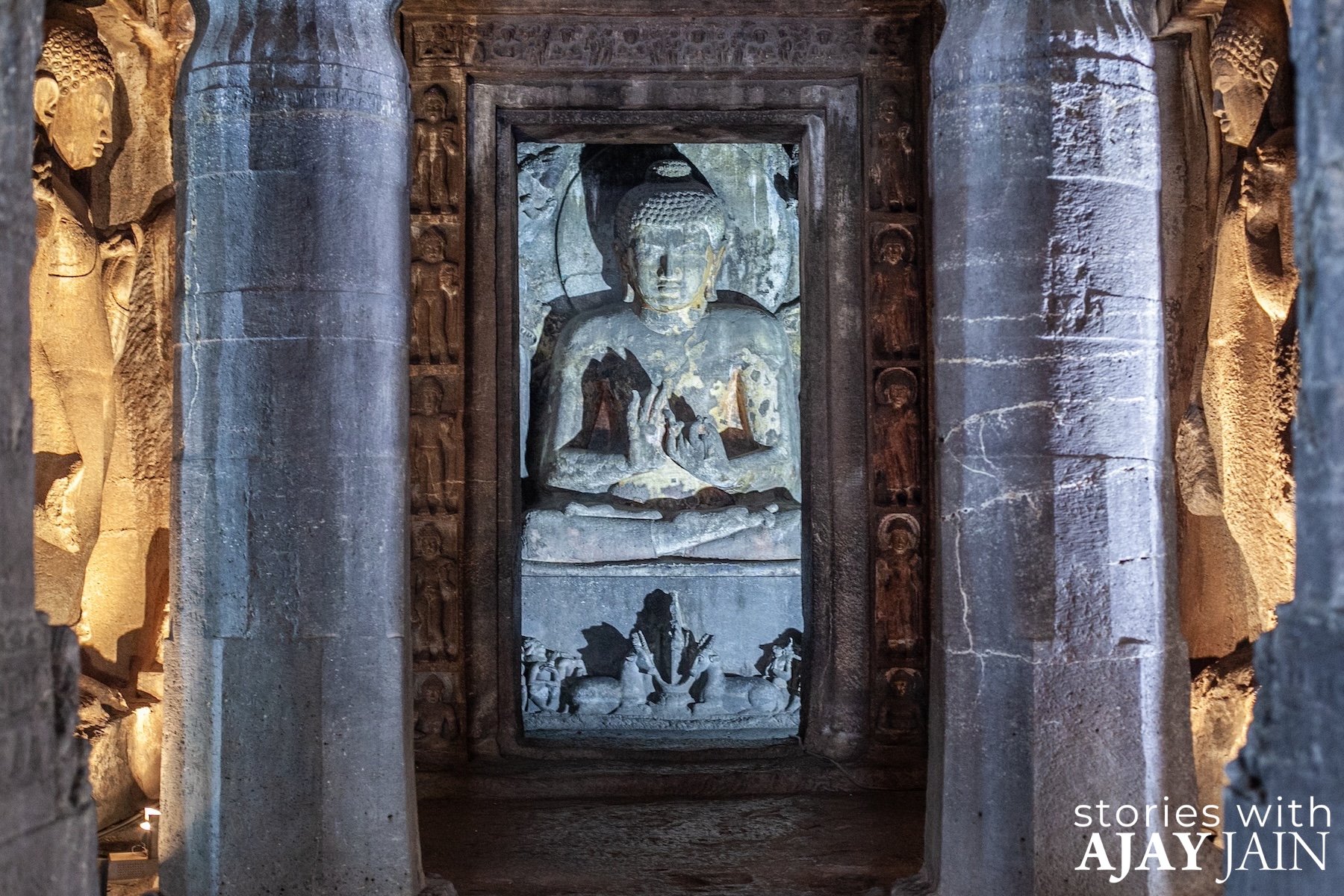
Cave 4 is the largest monastery in Ajanta, but it was never completed. The shrine itself has a colossal image of the Buddha in a teaching position. The walls of the antechamber are also carved with six gigantic figures of Buddha, each in a standing position. Two are unfinished; the right hand of each is shown in the abhayamudra position while the left is holding the hem of a garment. This cave was built in the first half of the 6th century A.D.
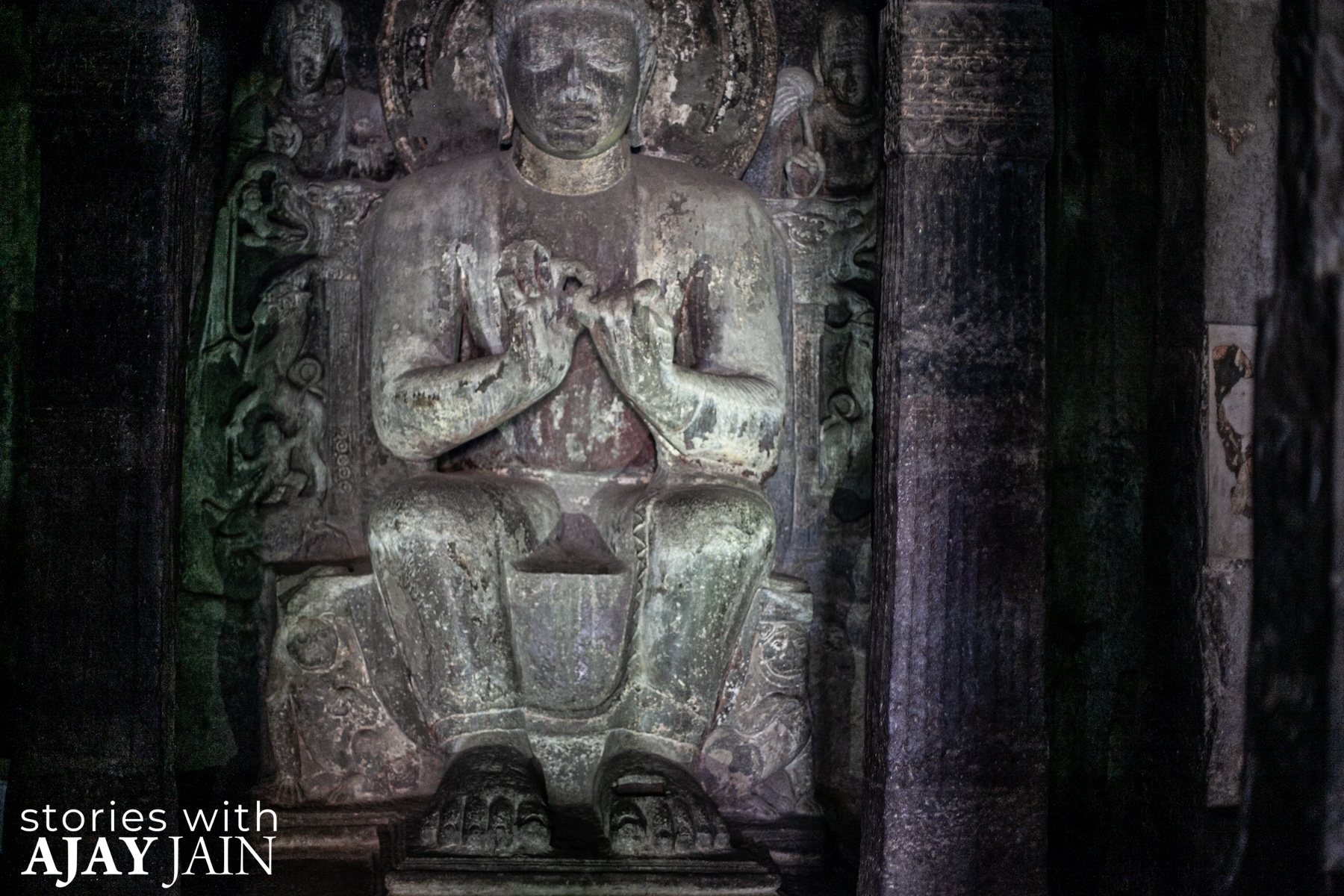
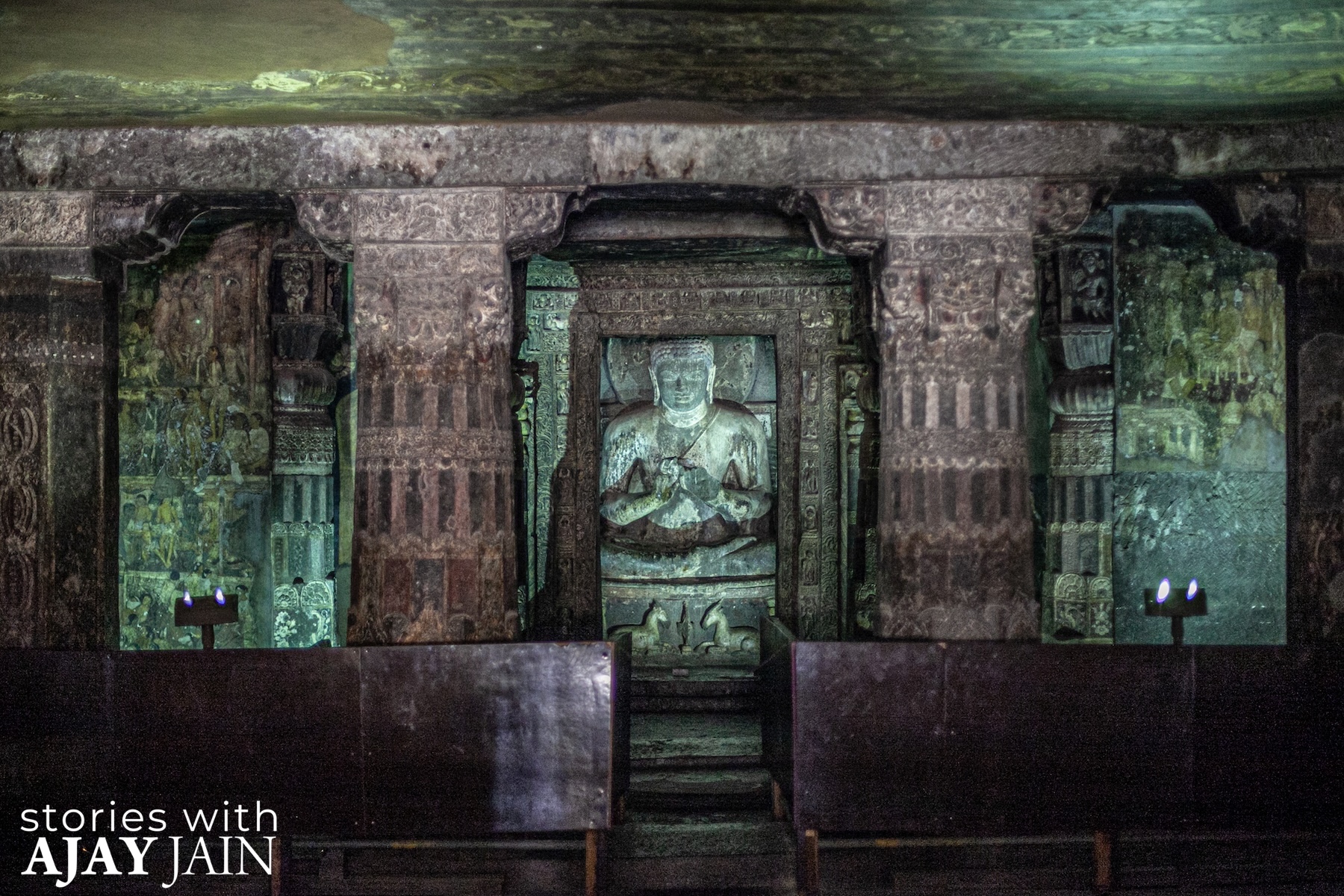
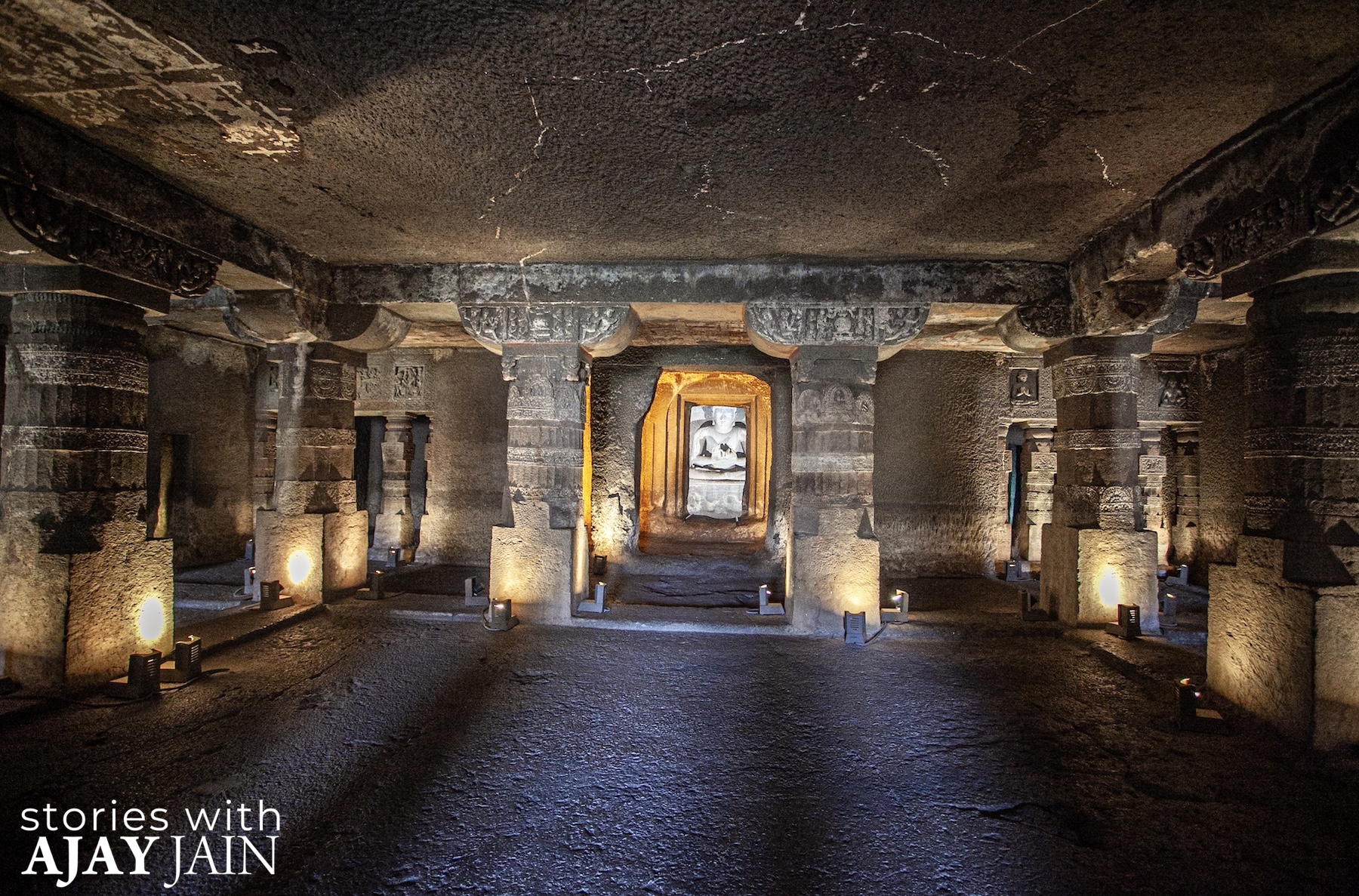
Cave 16 is the largest of all monasteries in Ajanta, and famous for depicting episodes from Buddha’s life. An inscription on the wall of the verandah mentions this monastery was gifted by Varahadeva, a minister in the court of Vakataka King Harisena (475 – 500 A.D.). The cave consists of a verandah, hypostylar hall, sanctum, chapels and cells. The sanctum also has an image of the Buddha sitting on a lion throne in a preaching position. The Buddha is flanked by Bodhisattvas as fly whisk bearers and celestial nymphs carrying garlands. The pillars are devoid of any carvings but were decorated with beautiful paintings once. The walls have been painted with the Jatakas, depicting previous births of the Buddha. The ceilings are rich with floral, faunal and geometrical designs.
The Buddha in Cave 17
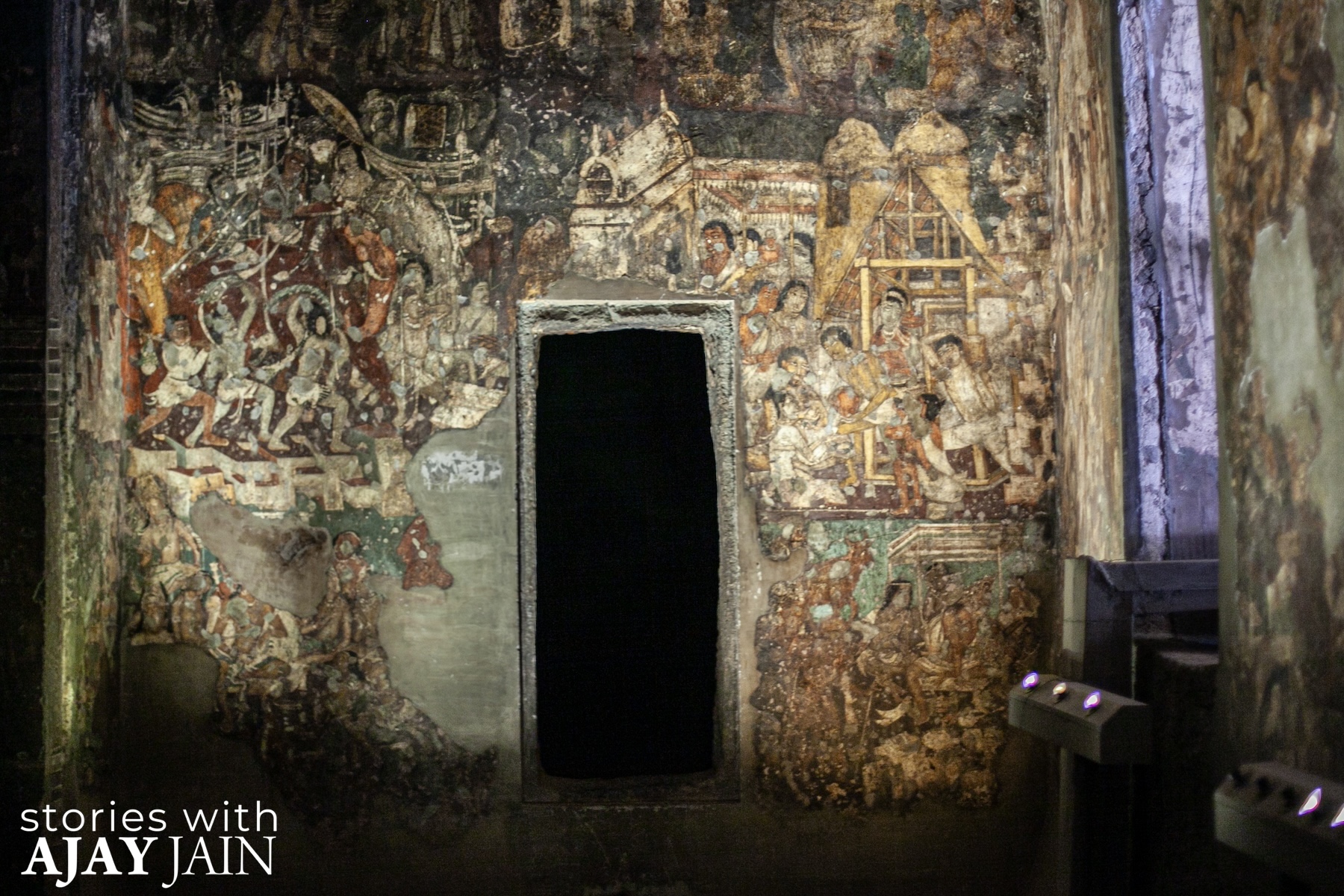
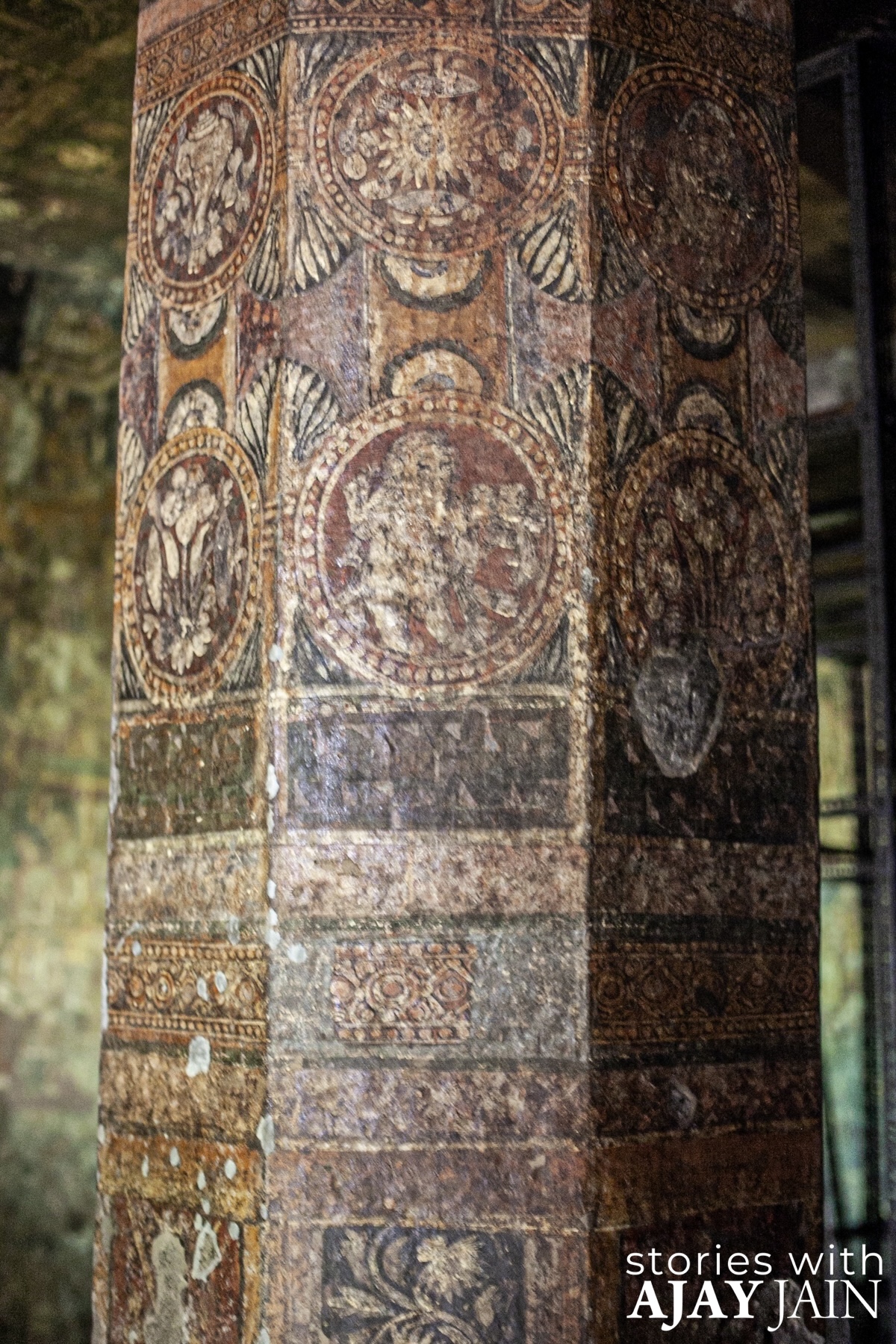
Cave 17 is a magnificent Mahayana monastery, rich with well preserved paintings depicting the Jatakas. Like Cave 16, this too came up under King Harisena in the 5th century A.D. The cave is also called the Zodiac cave – it has a gigantic circular wheel painted on the walls of the verandah. The lintel of the main door portrays seven mortal Buddhas as well as Maitreya, the future Buddha.
A painted pillar in Cave 17
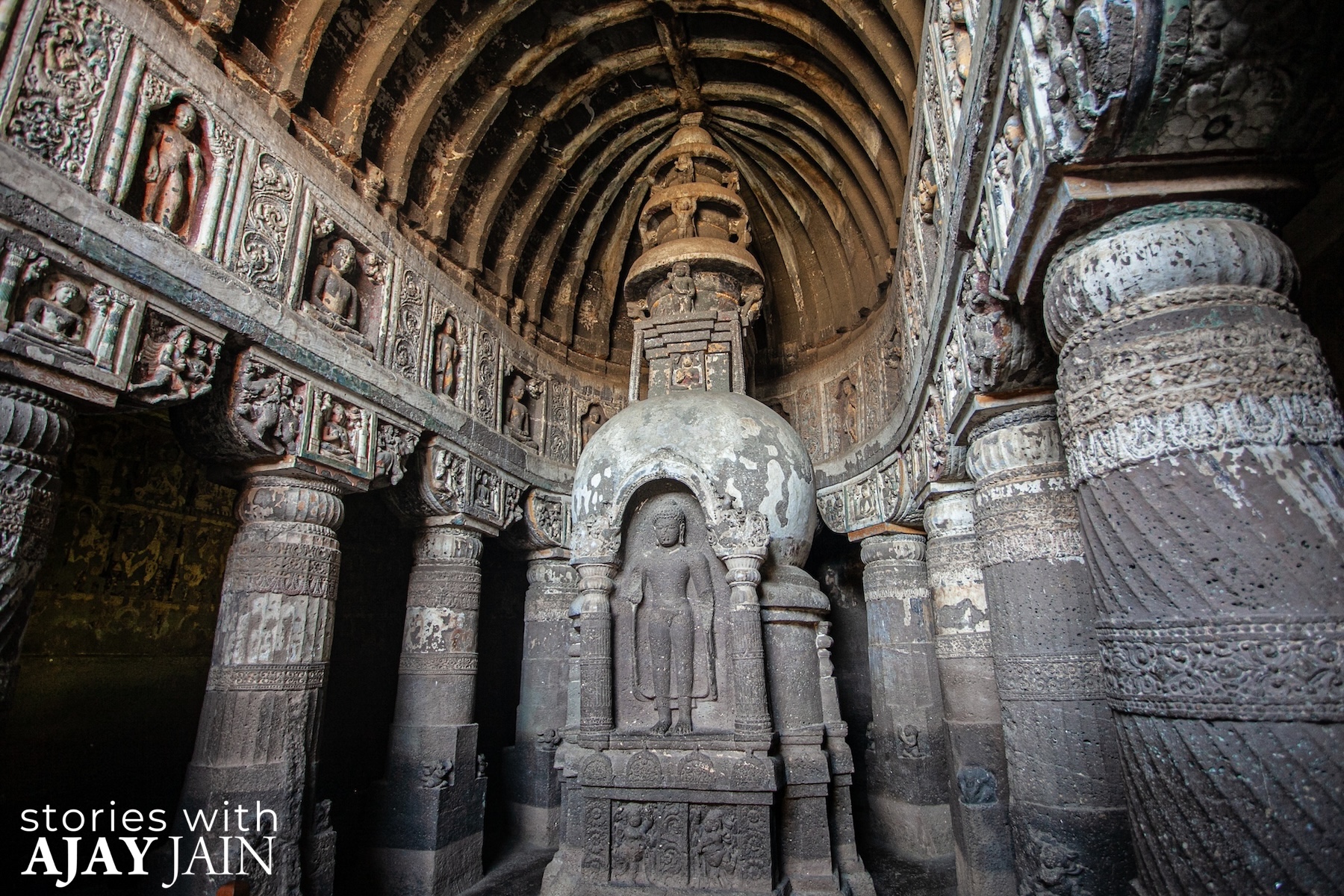
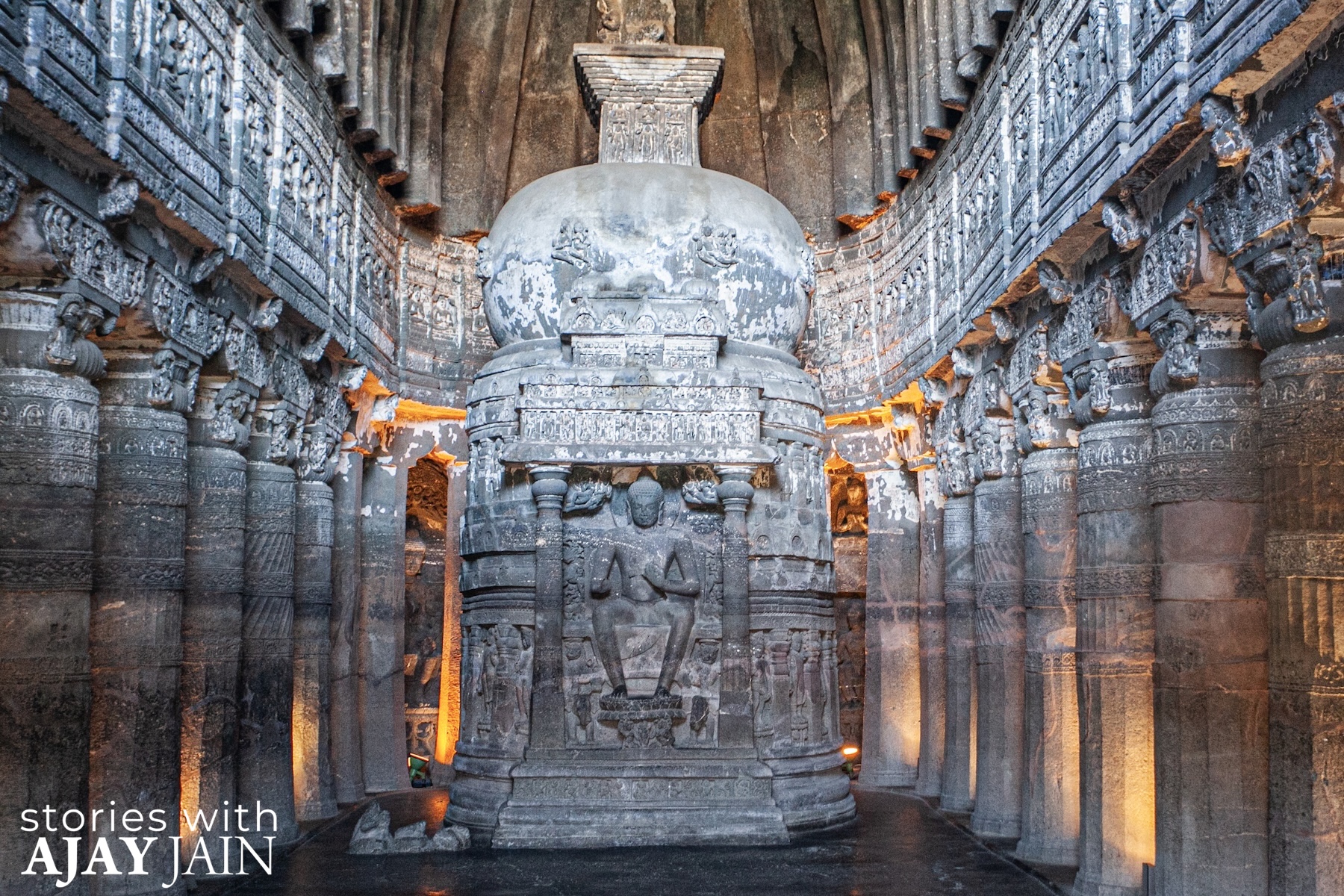
Cave 19 is a small chaitya-griha, and considered a showcase of Buddhist art in India. It consists of an elegant portico, verandah, hall and chapels. The apsidal hall is divided into a nave, an apse, and aisles marked with 17 pillars. A votive stupa with an elaborate and elongated drum and a globular dome stands against the apse. The pillars and the stupa are intricately carved with images of the Buddha and other decorative motifs. The ceiling is painted with floral motifs interwoven with animals, birds and human figures.
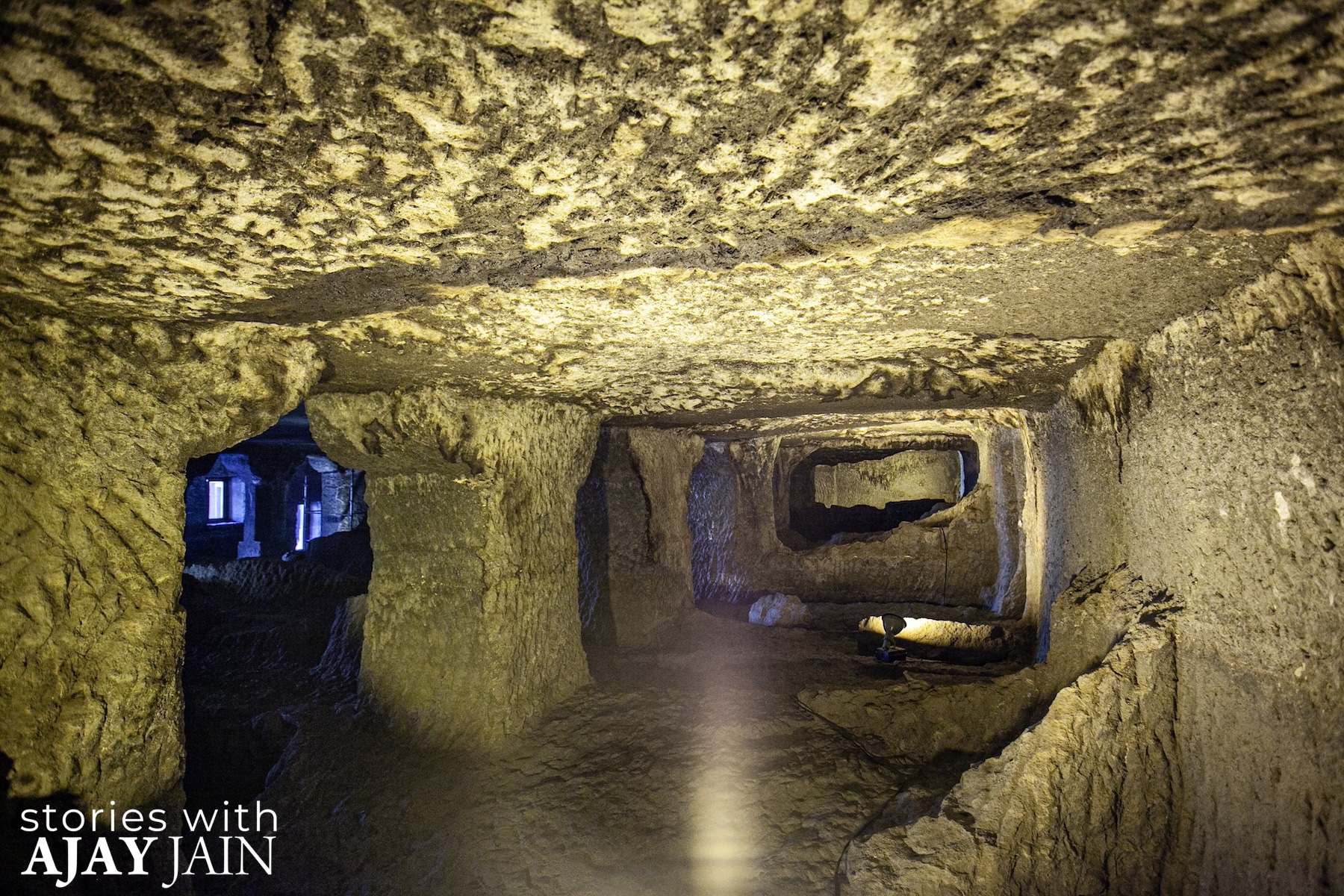
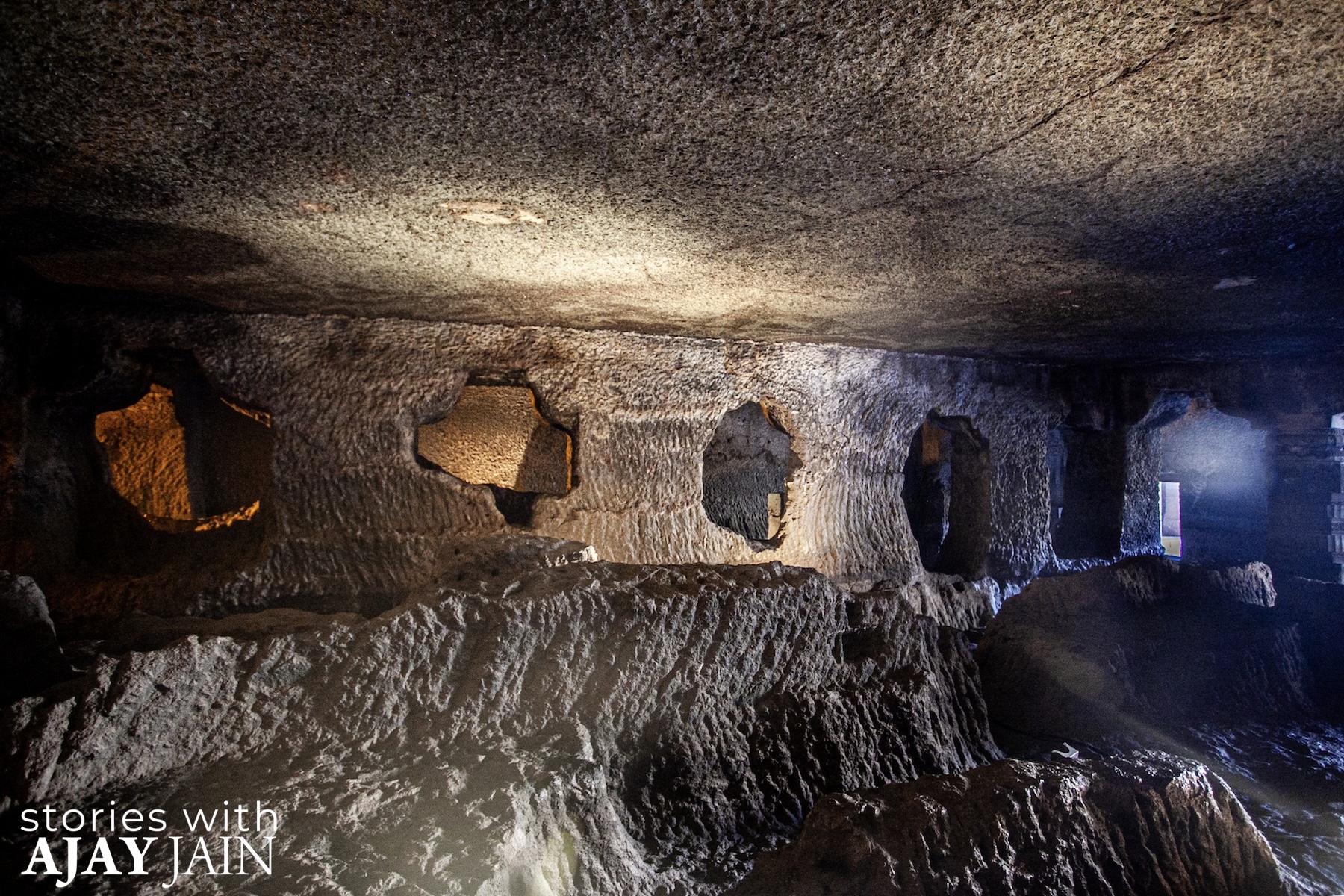
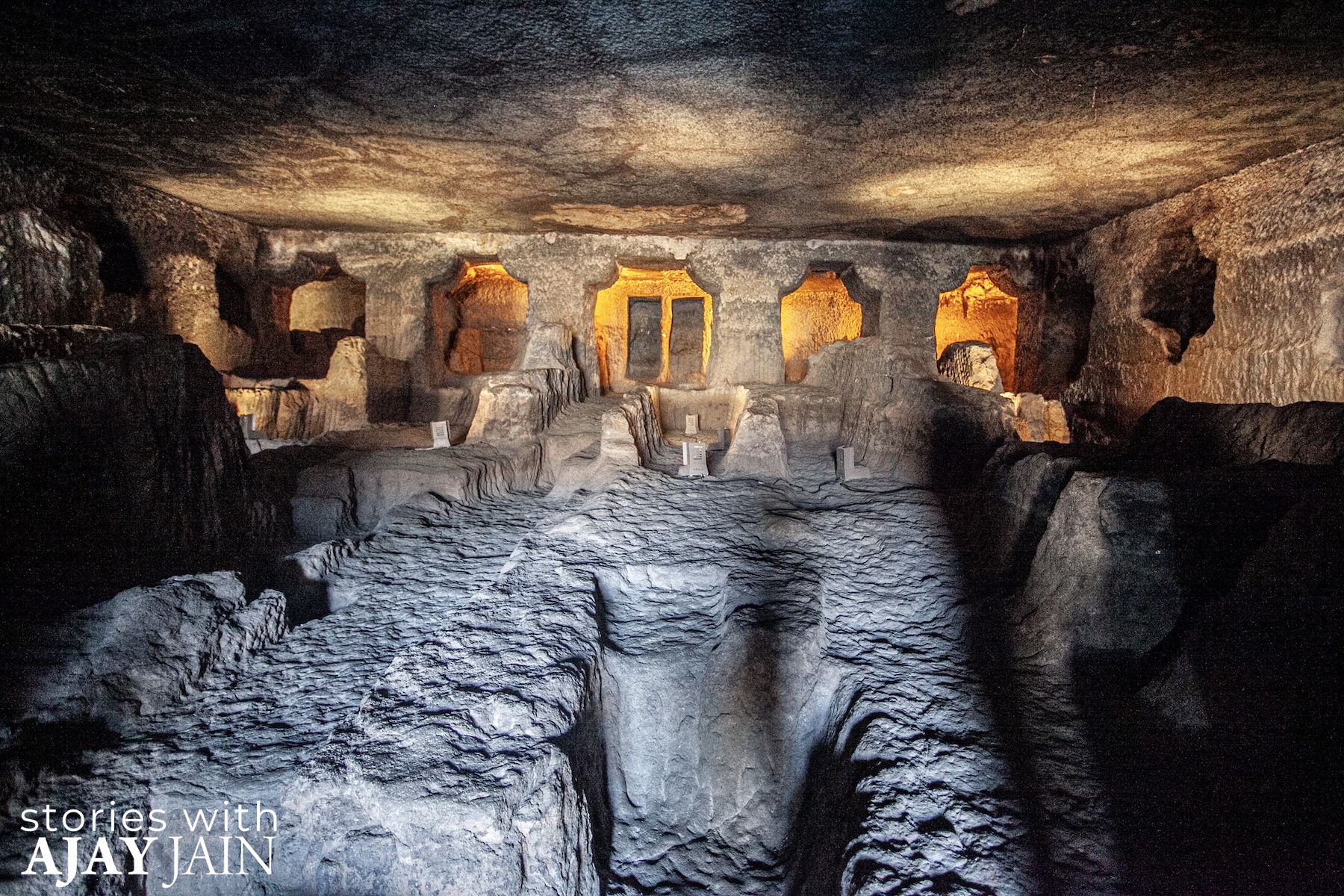
The incomplete Cave 24
Cave 21 is another beautiful monastery carved on a higher level in the 6th century A.D. It consists of a pillared verandah, sanctum with an antechamber, and cells. Twelve massive pillars support the ceiling, carved with elaborate imagery of flora, fauna, celestial figures and worshippers. The sanctum houses an image of a seated Buddha in a preaching position, flanked by Bodhisattvas as fly whisk bearers and celestial figures.
The incomplete Cave 24
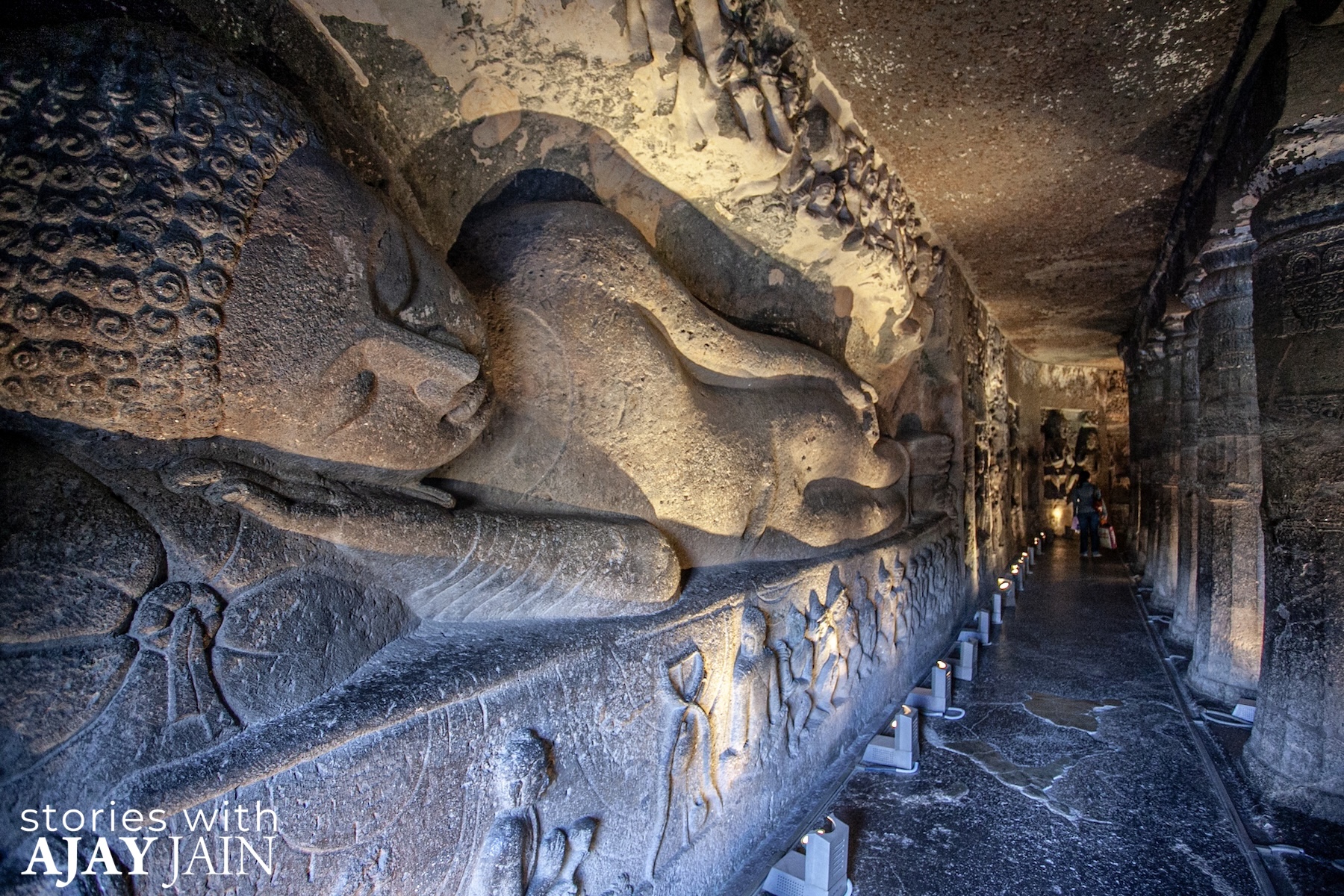
Cave 26, dated around 6-7th centuries A.D., is a chaitya-griha with an imposing façade, a spacious forecourt, a pillared verandah with two side porches and an apsidal hall. A monolith stupa within is the main object of worship here; it is marked with intricate carvings and a figure of the Buddha.
A reclining Buddha on the verge of attaining Nirvana depicted in Cave 26. The figures below are those of his followers mourning.
Cave 24 is incomplete but the second largest monastery after Cave 4. It may have been built in the 7th century A.D. The pillars are lavishly carved, as are the door and window frames.